Base building is booming in 2026. Modern MMOs and survival games offer sprawling construction features that let players claim territory, erect fortresses, and create entire communities from scratch. From deep-space colonies to post-apocalyptic outposts, the best multiplayer worlds now revolve around building your own structures. This year’s roster blends sci-fi ambition with gritty survival mechanics, giving players unprecedented freedom to design and defend their own bases. Below we break down the most exciting MMO titles of 2026 where base building is a star feature – starting with Star Citizen, whose long-awaited planetary base mechanics are finally arriving.
Star Citizen – Cosmic Base Building Arrives
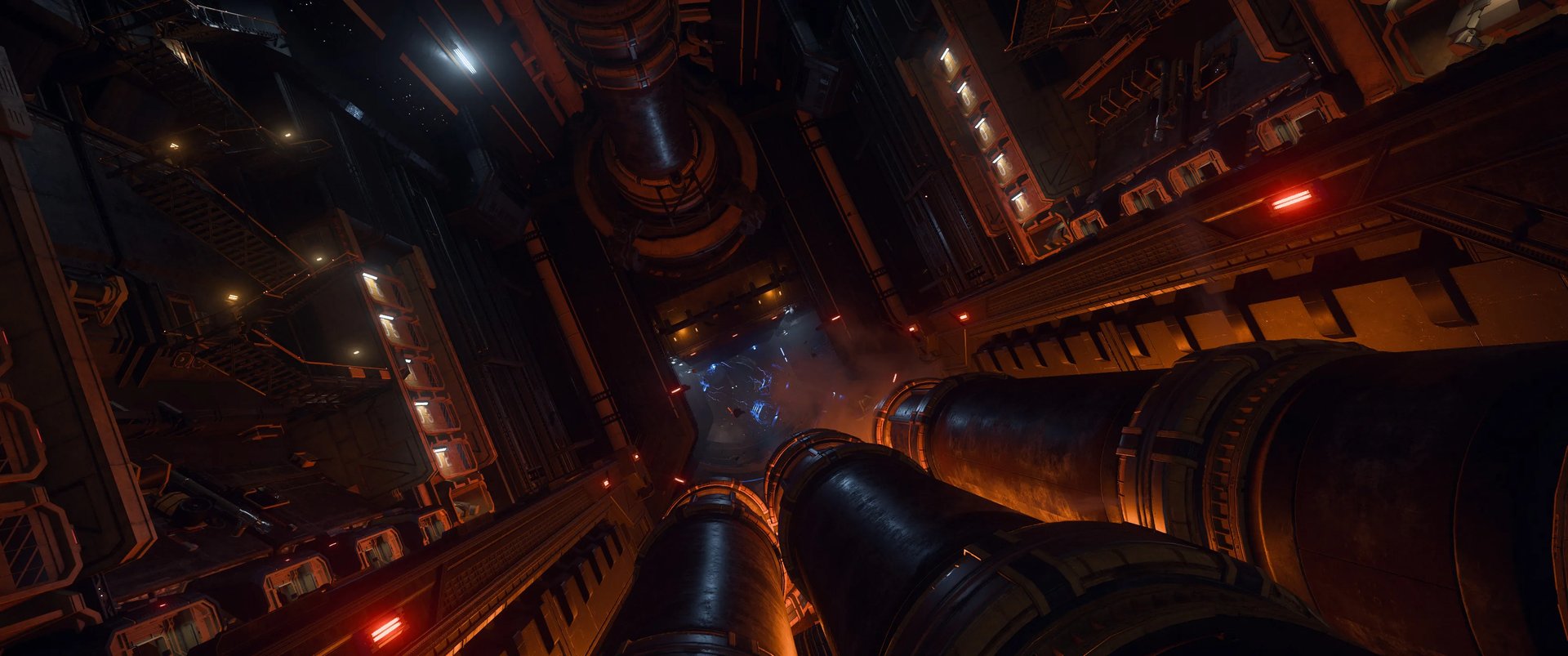
Star Citizen stakes the first claim on our list as its already-legendary development reaches one of its biggest features yet: base building. This massive space sim MMO – where players pilot starcraft and explore NASA-scale space cities across multiple connected star systems – is turning into a true living, breathing space frontier, and player-owned bases and outposts are the next transformation.
Cloud Imperium Games (CIG) has steadily fleshed out the system, and crucially, its foundations are now in players’ hands: the crafting profession has arrived, and CIG has stated plainly that “crafting is the basis for base building.” That means gathering raw minerals, refining them, and feeding factories to produce the components your outposts will need. With crafting live and refining expanding through 2026, the pieces are finally clicking into place.
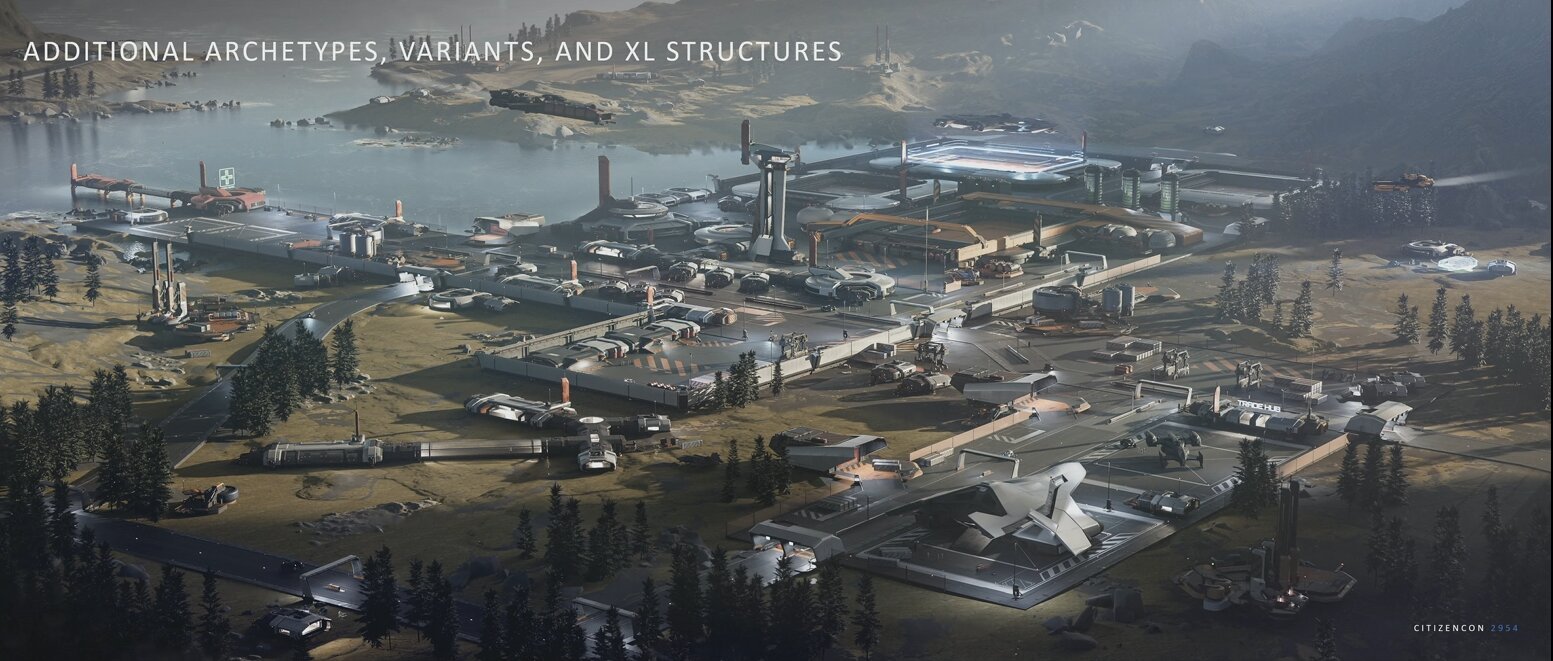
The base-building toolkit itself rolls out in tiers. Players will start small, anchoring a base with a pallet-like grav-cart machine (carried in ships like the Cutlass) that gives a top-down building view for placing foundation blocks and modular rooms. From there you’ll graduate to the Construction Tower revealed at CitizenCon – a deployable scaffold for medium facilities like refineries, miner platforms, and cargo hangars, with vertical space for multiple players to build together.
For truly massive bases and orbital platforms, Star Citizen introduces mobile construction ships – vessels like the Starlancer BLD and the colossal RSI Galaxy that act as floating workshops. The ultimate prize remains the Pioneer, a dedicated base-building ship that can autonomously assemble large structures (even player-designed stations) using drones and onboard automation. Imagine flying your Pioneer to a patch of desert on a terraformed world and deploying it to spawn walls, refineries, and high-tech labs with robot arms.
The result will be huge. In one shared universe, now spanning Stanton, Pyro, and Nyx with more systems to come, tens of thousands of players can stake a real claim. Picture a network of mining outposts across lawless Pyro, all built by players and connected by quantum links, or clan halls on shady moons full of trophy rooms and vehicle garages. With the player-run economy and security zones, base location will matter for both protection and profit.
Don't miss out on 50,000 free credits! Sign up for Star Citizen and use referral code STAR-33Y6-YQX9 to claim your bonus at the start. It's the perfect boost to begin building your own space base!
Star Citizen is still an evolving alpha with the full 1.0 launch a couple of years out, but its developers push frequent patches, and with crafting already live and construction tools slated through 2026, base building is guaranteed to see serious playtesting this year. Between now and launch, expect CIG to refine structure placement, add modular parts (walls, doors, power generators), and optimize building performance. This makes Star Citizen a must-watch – and a must-join – for any MMO builder fan. Just remember to use that referral code for a head start!
Dune: Awakening – Spice-Fueled Survival and Base Building
Jumping out of space and into the desert, Dune: Awakening launched in 2025 and is now a thriving live MMO in 2026 with heavy emphasis on base building. Based on Frank Herbert’s Dune, this open-world survival game by Funcom throws players onto the deadly planet Arrakis. You must survive scorching days, freezing nights, and the ever-present threat of giant sandworms—all while harvesting spice and fighting rival guilds.
Base building is essential to survival. You start by gathering resources to throw up a simple shelter, then expand and fortify: adding walls, roofs, defensive turrets, crop gardens, and small spice refineries. Eventually you can claim and upgrade multiple bases across Arrakis, each aligning with a Great House for unique architectural styles and building modules.
Two systems stand out in Dune’s take on building:
-
Blueprint System: Once you design or upgrade a base, you can turn it into a reusable blueprint – pick it up in the field and instantly recreate that layout elsewhere, or sell, trade, and share it via the in-game market. If you came up with a cool fortress or efficient bunker, you can export the plans for friends (or competitors) to import. This blueprint economy makes base building social and profitable – designing an optimal outpost and selling the plans is a genuine way to make bank.
-
Build Anywhere & Solido Projection: Beyond safe zones, players can venture into the desert and construct temporary hideouts. The “solido projection” feature lets you ghost a structure’s placement before locking it in, so friends can assemble different parts simultaneously – perfect for guild squads that need a quick fortified camp while hunting spice.
Now that it’s live, Dune: Awakening has proven its systems handle many players building on one map, and Funcom continues to expand it. A console release (PS5/Xbox) is coming in 2026 along with a new single-player mode, opening the sands to even more builders. Align your guild, build legendary fortress-cities in the desert, and fight for dominance over the spice flow – in Dune, your base is your guild’s citadel on the sands.
Fallout 76 – Versatile Vault Tech in the Wasteland
Fallout 76 has quietly become one of the most base-builder-friendly MMOs around. This online spin-off gives players a shared Appalachia where every player can set up a personal CAMP anywhere on the map. Here’s why its building game is still one of the best in 2026:
-
Flexible Base Locations: Fallout 76’s movable CAMP follows the player. When you travel, your CAMP stays persistent at its last set point, so you can experiment with building in any region – mountains, forests, near old vaults – and relocate without losing progress.
-
Continuous Updates: Bethesda keeps supporting Fallout 76 with major content and builder improvements. Recent CAMP overhauls delivered smoother building mechanics: better object snapping, faster placement, and enhanced tools to reorganize layouts on the fly – a love letter to builder players.
-
Rich Crafting Catalog: Craft everything from rusty shack walls to high-tech furniture using materials scavenged and scrapped from the world. Players have built mountain-top houses, beachfront resorts, even working amusement parks. Your imagination – and your resource budget – is the limit.
-
Community Showcases: While blueprint sharing isn’t a built-in feature, the community thrives on trading building tips and base designs, and Bethesda has awarded Atomic Shop gems to standout “base of the month” builds, providing endless inspiration.
Fallout 76 is rock-solid for builders who also enjoy role-play and light PvP. If you like buying a plot of virtual wasteland and obsessing over interior decorating, it remains very much alive – a testament that a 2018 MMO still feels fresh for home construction in 2026.
ARK: Survival Ascended – Taming the Wild and Your Base
ARK is a veteran survival title known for its blend of dinosaurs and base building. Re-released as ARK: Survival Ascended on new tech, it delivers the same core building fun with modern visuals. If you’re into constructing tribal villages or futuristic forts on primeval islands, ARK is an easy recommendation:
-
Bountiful Building Options: Gather raw materials (wood, thatch, stone, metal) by hand or with dinos, then place walls, ceilings, and foundations. Tiered building lets you start with thatch, upgrade to reinforced stone, and endgame with high-tech Tek shelters – each tier adding durability and options like electrical devices and gates.
-
Large Structures: ARK’s servers allow huge bases – multi-story castles, sprawling forts, enclosed farms. The game doesn’t cap building size (beyond performance), so you can build as big as you want.
-
Planning and Composition: Smithies, greenhouses, breeding rooms, ammo crafting, cold storage – ARK rewards serious builders who want an efficient, organized base rather than random walls.
-
Tribes and Territory: Alliances become de facto landowners, cooperating to expand and defend megabases. In PvP, raiding raises the stakes of good defensive design (Tek turrets, chokepoints, plant defenses). Cross-progression carries your builds from old maps into the new engine.
While ARK lacks space bases or crafting blueprints, it nails the full-survival experience: build defensible homes in a dynamic ecosystem. A massive modding community and private servers keep the content fresh, cementing ARK as a classic must-play – especially if you love dinosaurs!
Rust – Sharpened Wood and Metal Fences
If hardcore survival and gritty building are your thing, Rust is a go-to. Almost everything in its gameplay revolves around erecting and defending bases:
-
Wooden Roots: Start with a hammer to place wooden foundations, walls, and ceilings, then gather wood, stone, and metal to upgrade. A “1x1” starter hut can morph over days into a fortress with multiple floors, metal traps, and spiraling staircases.
-
Snap Grid Building: Rust’s precise snapping system makes symmetrical builds easy. Skilled players craft canal traps, intricate watchtowers, and turret-lined compounds.
-
Deep Customization: Windows, shutters, garage doors, airlocks, blast furnaces, sam sites, sentry turrets – constant updates keep adding build pieces and high-tech defenses.
-
Frequent Wipes: Most servers periodically reset the map, which keeps building fresh: every wipe is a blank canvas and a fast-paced race to build up a fortress.
-
Active Community: Creative and mini-game servers cater to pure builders, while main servers reward teamwork as groups farm and upgrade together.
Rust’s base building is about durability, cunning, and scale. The learning curve is tough – any weakness can be exploited by raiders – but the satisfaction of turning resources into an impregnable base is immense. In 2026, monthly updates keep bringing new parts and quality-of-life tools. For rugged, battle-tested bases, nothing beats Rust.
Conan Exiles – From Noir to Noble Fortresses
Funcom’s Conan Exiles (the game that inspired some tech in Dune: Awakening) is far from dead. Set in the brutal Hyborian world of Conan the Barbarian, it has very robust building mechanics that still attract players:
-
Freeform Building: Build almost anywhere outside protected zones, with foundations that conform to slopes. No fixed grid means bases can wrap around cliffs, enclose caves, or stand on stilts.
-
Building Hierarchy: Stability calculations make multi-story architecture realistic and challenging – employ buttresses and supports, or watch structures collapse.
-
Toy Box of Decor: An insane amount of decorative pieces and structures – statues, tapestries, moats, fence spikes, deity altars, and thrall guards – lets your base express style as much as function.
-
Active Live Service: Ongoing updates add new recipes, biomes, and seasonal decor, keeping players returning to expand or redesign their homes.
The gather-build-raid loop is familiar to Ark and Rust fans, but with a distinctive Conan aesthetic. Decades of polish make it worth a look – establish a clan stronghold in a desert city or a mountaintop fortress in Cimmeria.
Dual Universe – Unbounded Cities in One Shard
Rounding out our list is Dual Universe, a niche but ambitious sci-fi sandbox MMO built around a fully continuous single-shard universe where every planet is editable by players:
-
Seamless Planetary Building: On any planet, carve out plots, mine resources, and assemble voxel blocks into anything from homes to entire cities – all visible to every player.
-
Player-Built Economy: Cities and corporation bases are literally built by players, with citizen-run infrastructure like power grids, markets, and defense walls. Building is a genuinely social act.
-
Space & Ground Integration: Build spaceships and even orbital stations; some player-designed orbitals serve as black markets or forts.
Dual Universe isn’t as mainstream as the other titles here, but its ambition is unmatched – one giant continuous player-built galaxy. For serious enthusiasts of user-generated worlds, it’s the purest expression of MMO base building.
Space Engineers 2 – Precision Engineering in the Vacuum
For builders who want engineering rather than just placing pre-made walls, Space Engineers 2 is the rising star of the space-construction genre. Keen Software House’s sequel launched in Early Access in early 2025, and through 2026 it has grown fast: the latest vertical slices added planets, survival gameplay, and “Backpack Building,” plus mechanical blocks like rotors and pistons, area welding, production lines, weapons, and turrets. You mine ore, refine it, and assemble ships, stations, and planetary bases block by block with real physics and structural integrity behind every design.
- Grid-Based Engineering: Build functional ships and bases from individual blocks, wiring up power, conveyors, and mechanical systems. Nothing is decorative-only – if it’s built wrong, it breaks.
- Space and Ground: Construct orbital stations, mining rigs, and surface outposts across the Almagest System’s planets, moons, and asteroid fields.
- Survival Progression: Gather and refine resources to power your builds, adding a genuine survival loop to the sandbox creativity the series is famous for.
One honest caveat for this list: Space Engineers 2 is not an MMO and multiplayer is still rolling out. Keen has confirmed 4-player co-op is targeted for late 2026, with larger-scale multiplayer and dedicated servers to follow. If you’re a solo or small-group builder who loves technical, physics-driven construction, though, nothing else on this list matches its engineering depth – and its multiplayer future is worth watching closely.
Honorable Mentions
A few other games deserve quick shout-outs for their building components:
- No Man’s Sky: Features a robust base-building mode across countless planets, with a friendly interface and big upgradable bases – now bolstered by 2026’s anniversary-year updates.
- Boundless: A voxel MMO where players connect worlds by building portals; bases can be as elaborate as you want.
- New World (Aeternum): Known for town siege warfare, with guild housing and collaborative crafting stations around territories.
Build Your Legacy in 2026
Whether you dream of erecting a gleaming spaceport under an alien sky or forging a canyon-stronghold in a pirate-ridden desert, 2026’s MMO scene has no shortage of options. Star Citizen is pushing the envelope by bringing base building to sci-fi space across a multi-system universe. Dune: Awakening, now live, ties base building to survival and team warfare on Arrakis. Meanwhile, evergreen worlds like Fallout 76, ARK, and Rust keep evolving with new tools for veterans and newcomers alike.
Grab your helmet, your hammer, or your digital blueprint tablet – whichever game speaks to you, there’s a powerful builder community waiting. And if building in Star Citizen intrigues you, now is the time to jump in.

Claim Your Plot in the 'Verse
Start building in Star Citizen with 50,000 free UEC using our referral code.